Evet! GPS Sinyalleri kesinlikle karıştırılabilir ancak yolcu uçaklarının etkilendiğini söylemek ne kadar doğru olur?!
Aşağıdaki görülen Rus yapımı GPS jammer ile GLONASS Uydularından veri alan alıcılar yanıltılabiliyor.
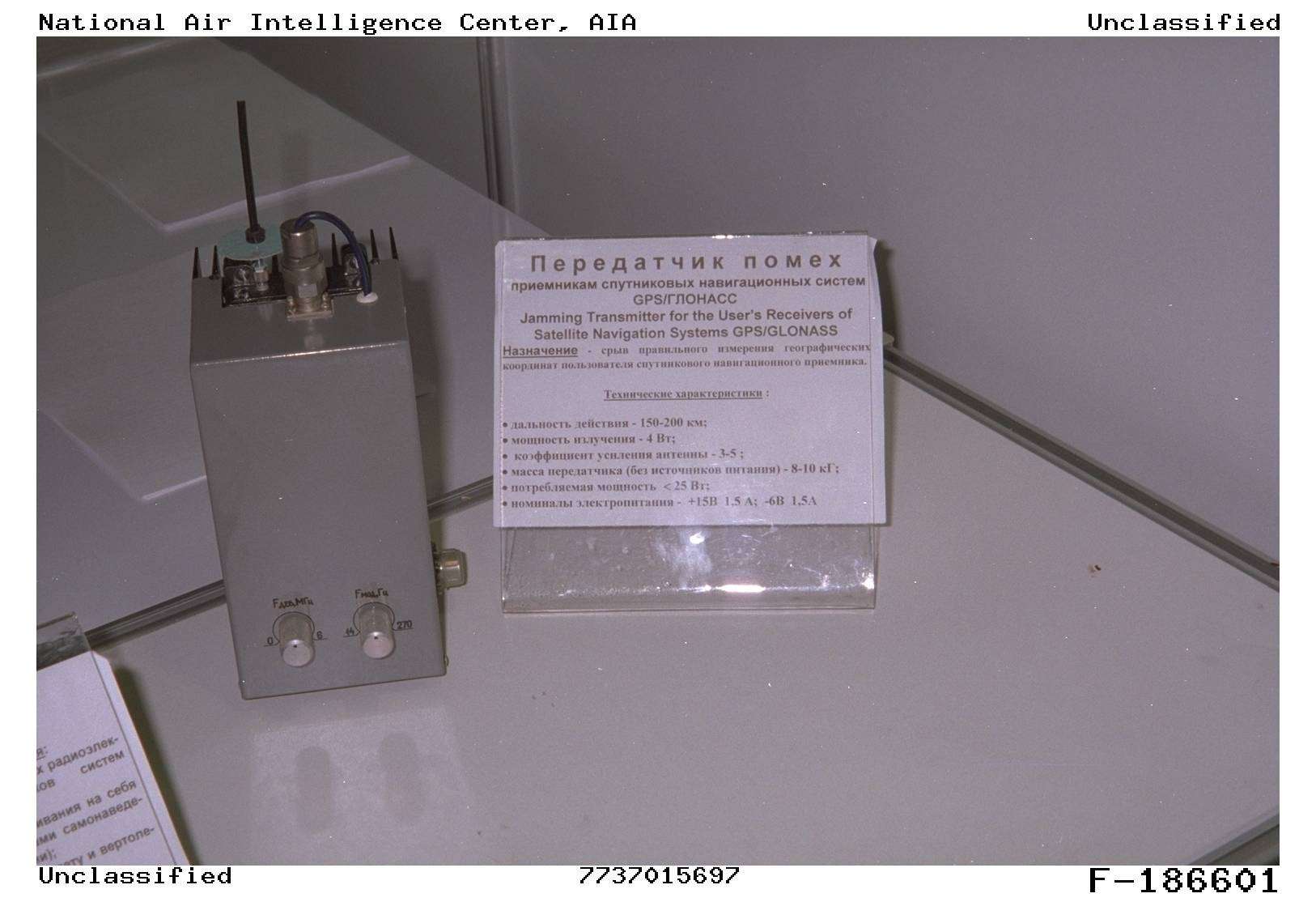
Teknik karakteristikleri;
Operasyon menzili: 150-250 km
Çıkış gücü: 4W
Anten kazanç faktörü: 3-5
Ağırlığı: 8-10kg
Güç tüketimi : 25W
Elektriksel gereksinimler: +15V 1.5; -6 1.5A
-----------
Aşağıda ev yapımı bir GPS jammer'ın tehlikesi, computerworld'de
yayınlanmış.
Air Force Lt. Col. Ken. McClellan, a Pentagon spokesman, said the implications of homemade jammers described in the article are "somewhat serious" because the use of such jammers "could disrupt commercial operations."
McClellan said GPS experts at the Pentagon do not "at the moment" view homemade jammers as a hazard to
flight safety for commercial aircraft or ship operations, "
but rather a nuisance."
The Federal Aviation Administration (FAA) is developing a nationwide GPS-based precision landing system. (Evet Amerika genelinde geliştiriliyor) And the Coast Guard operates a GPS-based maritime navigation system on both coasts, the Great Lakes, inland waterways and Hawaii. Bill Mosley, a spokesman for the Department of Transportation, the parent agency of the FAA and the Coast Guard, said his department is well aware of the threat posed by GPS jammers.
The DOT's John A.
-----------
Evet ev yapımı rahatsız ediyor! Fakat askeri amaçlar için profesyonel olarak üretilenler neler yapabilir!
Karıştırmak bir tarafa interferans ile (düzenli yapıcı ve yıkıcı girişimler ile) yönlendirme yapmak bile mümkün olabilir... (Uçaklar için doppler ve konum kaymaları gibi faktörler ile uğraşmamak için bu tarz aygıtlar kargoda taşınabilir! Yani hareket kaynağı ile...)
Ancak şuan için GPS jammer ile bir yolcu uçağını düşürmek yeterli görülmüyor.
-------------
Aşağıdaki karıştırıcı ise, araca bağlanabilen bir GPS Jammer, bu jammer Hollandalı DetectNu firması tarafından üretiliyor...
Araç aracın olası GPS sistemleri ile takip edilmesini engellemek amaçlı tasarlanmış... (Paranoyaklar için karıştırıcı :)

-----
Güvenilir kaynaklardan biri olan space.com sitesinde yayınlanan aşağıdaki haberi incelediğimizde;
http://www.space.com/news/gps_iraq_030325.html-------------
WASHINGTON -- U.S.-led coalition forces have destroyed six devices being used by Iraqis to try to jam signals from the GPS satellite navigation and weapon-guidance system, a U.S. senior military officer said.
Speaking to reporters during a March 25 briefing in Qatar, U.S. Air Force Maj. Gen. Victor Renuart, director of operations at U.S. Central Command, said that in one instance, the jamming device was destroyed with a GPS-guided bomb.
Another Pentagon official, speaking March 24, said Iraqi attempts to jam GPS using devices allegedly supplied by a Russian company have not succeeded.
--------------
Bir GPS- Jammer ile GPS güdümlü bomba yok edilebilir.
Aşağıda ise "Scientific Research Corporation" firmasının askeri amaçlar için ürettiği jammer...
Görüldüğü gibi
elektronik harp metotları arasına giriyor.
http://www.scires.com/products/sti/tss5.htm
ELECTIVE GPS JAMMER  The Global Positioning System (GPS) Jammer Test Instrumentation (GPS JTI) facilitates exploration of open-air GPS jamming test methods via the ability to selectively jam targeted GPS dependant systems while not affecting untargeted GPS receivers. The GPS JTI jammer will support exercises and scenarios that involve numerous electronic warfare experiment approaches against GPS dependant systems. Due to the achieved performance, the GPS JTI will be used for evaluating the requirements of future GPS jamming test instrumentation to be developed and will also be used for demonstrating the techniques and technologies available for such exercises. SRC provides engineering, test and management support for the development, integration, and test of the GPS JTI.
The GPS JTI accommodates the necessary instantaneous dynamic range of 100 dB while maintaining flexibility through digital attenuator and synthesizer controls and replaceable electronically programmable read only memory units. A control signal transmitter extends the programmable and reconfigurable approaches to the transmitting test asset.
SRC developed flexibility into the hardware architecture through programmable and modular techniques. To ensure that the analog hardware preserved the dynamic range requirements of the simulation community, modeling and simulation of the automatic gain control circuitry was performed and was verified at system acceptance test. Also, the noise characteristics of the radio frequency front end was modeled in conjunction with AGC noise power spectral density inputs for resolving ultimate dynamic range predictions and forming specifications for the noise performance of the RF front end.
-----
GLS (GPS/GLOSNASS Landing System uçakların inişlerinde kullanılmaktadır.
Aşağıda continental havayollarına ait MD-83'ün 1998 yılında ilk kez GLS kullandığı haberi yer alıyor,
------------------
Steve Nichols
Honeywell will claim a world first later this month when a Continental Airlines MD-83 flight becomes the first revenue service to land using a GPS landing system (GLS).
On 21 September, the aircraft will fly two approaches into New York Newark and Minneapolis-St Paul using the SLS system developed by Honeywell and Pelorus Navigation.
The SLS-2000 is the only GLS to have received FAA acceptance for its ground-based system and Honeywell has received orders from several airports in the USA and abroad.
Announcing the flight at Farnborough, Mark Howes, vice-president of Honeywell Airport Systems, says: "This flight will be the culmination of a very big year for our Satellite Landing System.
---------------
Ancak her MD-83'de GLS sistemi olduğuna dair bir makale mevcut değil...
ABD'de Yolcu uçaklarının inişlerinde, WAAS (
Wide Area Augmentation System) adında gelişmiş bir sistem bu yıldan itibaren kullanılmaya başlanmış. Bu sistemde GPS bir doğrulama aracı olarak kullanmakta...
------
Ancak en açıklayıcı makale "Amerikan Navigasyon Merkezinden" gelmekte...
Bu makale ile GPS Jamming'in Nasıl engelleneceği ile ilgili bilgi bulunmakta! Dikkat nasıl engelleneceği! FAA'in'de araştırmada bulunması ilginç. Sadece o da değil DoD ve diğer agency'ler...
Overview of the US Federal Government's Policy on Activities Which May Cause Interference to GPS:
On occasion, the US Federal Government is required to conduct GPS interference tests, exercises and training activities that involve jamming of GPS receivers. These events go through a lengthy coordination process involving the Federal Aviation Administration (FAA), the US Coast Guard (USCG), the Department of Defense (DoD) and other government agencies. (CIA gibi :)
Due to the fact that these training and testing activities can involve a number of aircraft, ships and/or other military equipment and up to hundreds of personnel, cancellation or postponement of a coordinated test should only occur under compelling circumstances. In general, only safety-of-life/safety-of-flight conflicts warrant cancellation or postponement of a coordinated interference test.
In the event that an interference activity compromises a safety-of-life mission, procedures exist to protect those involved. If a Lifeguard (medical evacuation flight), fire-fighting mission, or other aviation-related activity where GPS navigation is essential is impacted the conflict should be reported to the nearest FAA Air Traffic Control (ATC) facility. FAA will issue ”cease buzzer” (stop jamming) notification to the tester. All testers are required to set up a point of contact reachable via telephone throughout the testing period.
Non-aviation related safety-of-life activities that require immediate cessation of GPS interference tests should be reported to the USCG Navigation Center (NAVCEN). The NAVCEN will either issue the “cease buzzer” or relay it to the FAA for issuance.
In the event that a safety-of-life conflict is anticipated, but not immediate, the affected GPS user should notify the USCG NAVCEN. An example of this is firefighting activities that may spread to testing areas. In some instances, the USCG may choose to put the tester directly in contact with the affected GPS user. In other cases, the USCG may choose to notify the appropriate government official to resolve the conflict.
When attempting to resolve such a conflict, the interests of both parties must be taken into account.
Conflict resolution considerations:
- What is the safety issue involved?
- Is there an alternative, non-GPS method to perform the activity?
- What are the implications to National Security if the test, training or exercise is terminated or postponed?
- For both parties, what is the purpose of the activity?
- For both parties, how many individuals or systems are affected?
- For both parties, what are the economic implications?
- Is it possible for either party to reschedule to another date or set of dates?
- Is it possible for either party to only use a portion of the dates they require?
- Is it possible for either party to use different or fewer times of day than in the original request?
The answers to these questions will provide guidance to the decision makers who will resolve the issue.
Test parametreleri için
burayı tıklayınız.
http://www.navcen.uscg.gov/gps/gpsnotices/default.htm
-----------------------------
FAA'in soru ve cevaplarından;
How vulnerable are GPS satellites to jamming and interference?
GPS satellite signals, like any other navigation signals, are subject to some form of interference. The FAA is actively working with the U.S.
Department of Defense and other U.S. Government Agencies to detect and mitigate these effects and make sure that the GPS and any related augmentation systems are available for safe aviation operations. As with all navigation aids, interference, whether intentional or unintentional, is always a concern.
A number of methods for minimizing interference have been identified and tested and others are being investigated. The FAA is also working to make sure a
ugmentation systems detect and mitigate these effects.----